Lithium vs alkaline batteries for a trail camera: what actually lasts longer?

Energizer Ultimate Lithium AA (8-pack)
$11.99 listed price, changes often See it on AmazonWhat is the actual difference between lithium and alkaline AA batteries?
An alkaline AA battery holds roughly 2,500 mAh at room temperature, but loses a large share of that capacity in freezing weather, since the chemical reaction inside slows down significantly in the cold. A lithium AA battery such as Energizer Ultimate Lithium holds a bit more capacity to start, around 3,000 mAh or more, and keeps working reliably down to roughly -40F, with far less of a cold-weather capacity drop. In a trail camera that sits outside through a cold snap, that difference is the whole reason lithium is the standard recommendation.
The chemistry difference also shows up in weight and shelf life, though neither matters as much for a trail camera as runtime does. Lithium AAs are noticeably lighter than alkaline of the same size, which barely matters mounted on a tree but adds up when carrying a bag of spares on a long scouting walk. Lithium also holds its charge far longer in storage, useful for anyone who buys batteries in bulk once a season rather than restocking as needed, where alkaline batteries left in a drawer for a year or two can already be noticeably weaker by the time they go into a camera.
Does the battery type matter more for cellular cameras?
Yes. Cellular transmission is the single biggest drain on a cellular trail camera, more than the infrared flash or the sensor itself, since sending a photo out over a cell network takes real power every time it happens. A cellular camera like the Moultrie Edge 3 or SPYPOINT Flex-M on alkaline batteries in a cold, high-traffic spot can burn through a set far faster than the same camera on lithium, simply because every transmitted photo adds to the drain on top of everything a non-cellular camera already does.
Weak signal areas make this worse on alkaline specifically, since a camera struggling to find a cell tower will retry a transmission several times before giving up, burning extra power on every attempt regardless of battery type but hitting an already-weaker alkaline set harder. Confirming decent signal strength at the mounting spot, covered at trail camera cellular signal and antennas, is worth doing alongside the battery choice itself rather than assuming lithium alone fixes a weak-signal drain problem.
A non-cellular camera does not carry this same extra drain, since it never has to reach out to a tower at all; its power budget is limited to the sensor, the flash and, on some models, video recording. That is one more reason the lithium recommendation matters most for cellular cameras specifically, even though it still helps a non-cellular camera in cold weather.
Is alkaline ever the right choice?
It can be, for a specific situation: a non-cellular camera in a warm climate or mild season, at a spot visited often enough that a weaker battery set is not a real problem. Alkaline is cheaper up front, and for a backyard or garden camera checked every week or two, the cold-weather capacity loss and shorter cellular runtime that make lithium the better pick elsewhere simply do not come into play as much.
It is worth being honest about how narrow that case really is, though. Most trail cameras end up somewhere colder, more remote, or higher-traffic than originally planned at some point in a season, and a weak alkaline set caught off guard by an early cold snap or an unexpectedly busy trail is a common, avoidable failure. Buying lithium from the start, even for a spot that seems mild and low-traffic today, removes that risk for a relatively small price difference.
What about rechargeable NiMH batteries instead?
NiMH rechargeables such as the Amazon Basics NiMH AA are a genuine third option, cheaper over time than buying disposable batteries repeatedly since they can be recharged hundreds of times. The catch is voltage: NiMH cells run at 1.2V compared to a fresh alkaline or lithium AA's 1.5V, and some trail cameras read a full-strength NiMH pack as already low on power, showing a low-battery warning sooner than the batteries actually warrant. It is worth checking a specific camera's manual or owner reviews before committing to NiMH for that reason.
How much longer does lithium actually last, and does the extra cost pay off?
Roughly two to three times longer than alkaline in the same camera and conditions, more in genuinely cold weather where alkaline's capacity drop is worse. That multiplier holds up across both cellular and non-cellular cameras, though the absolute runtime still depends heavily on trigger frequency, whether night infrared and video modes are in heavy use, and, for cellular models, how many photos are being sent out. The trail camera battery life calculator works out an estimate for a specific camera and battery combination.
That runtime multiplier usually does pay off. A set of alkaline batteries that dies in six weeks in a cold, high-traffic spot means a wasted trip out to the camera and, worse, missed photos during however many days the camera sat dead before anyone noticed, a cost most owners value more than the few extra dollars a lithium pack costs over alkaline. The math shifts only for a low-traffic, mild-climate, non-cellular camera checked every week or two anyway, where alkaline rarely dies before the next scheduled visit and the lithium premium buys convenience that is not really needed.
Are there external battery packs worth adding, and what is the biggest battery mistake owners make?
For heavy cellular use, external packs are worth adding. Packs like the IBATTS LIT-10 for SPYPOINT or the Azonpower 5Ah battery for Moultrie Edge supplement or replace AA batteries entirely with a larger rechargeable cell, often paired with a solar panel for continuous power. A brand-matched pack like the CPY Power Mag battery for Moultrie Edge or the REACELL LIT-10 for SPYPOINT is built to physically fit that specific camera body, where a general external battery like the Stealth Cam 12V external battery connects by cable and can sit further from the camera itself. Either style is really a workaround for heavy cellular drain rather than a replacement for choosing lithium AAs in the first place.
The single biggest mistake is putting alkaline batteries in a cellular camera headed into a cold season and expecting the same runtime advertised for lithium; manufacturer runtime estimates are almost always based on lithium in moderate conditions, not alkaline in a hard freeze. A close second is assuming a fresh set solves a problem that is actually a trigger or false-alarm issue, covered separately at trail camera settings, since a camera firing constantly on wind-blown grass will burn through even lithium fast. A third is buying batteries at random pack sizes: an owner running four or five cameras is better served by a bulk 24-pack like the Energizer Ultimate Lithium AA 24-pack or the NINMAX Lithium AA 24-pack, cheaper per battery than repeatedly buying smaller packs.
Lithium vs alkaline vs NiMH at a glance
| Factor | Lithium AA | Alkaline AA | NiMH rechargeable AA |
|---|---|---|---|
| Cold weather performance | Strong to about -40F | Weak, capacity drops sharply | Weak in deep cold |
| Capacity | ~3,000+ mAh | ~2,500 mAh at room temp | Varies, lower voltage |
| Reusable | No | No | Yes, hundreds of cycles |
| Best for | Cellular, cold season, remote spots | Mild climate, checked often | Cameras that read NiMH voltage correctly |
Gear mentioned in this guide
Listed prices change often; the button shows the current price.
AA batteries Energizer Ultimate Lithium AA (8-pack) $11.99 Energizer Ultimate Lithium AA, an 8-pack for about $11.99, is rated to work down to about -40F and holds roughly 3,000+ mAh, the standard recommendation for cellular and cold-weather cameras.
Specs and variants Check price AA batteries Allmax Lithium AA (24-pack) $29.99
 Allmax Lithium AA, a 24-pack for about $29.99, is a cheaper per-battery lithium option for owners running several cameras at once.
Specs and variants Check price AA batteries Amazon Basics NiMH rechargeable AA (8-pack) $10.49
 Amazon Basics NiMH rechargeable AA, an 8-pack for about $10.49, is a lower-cost long-term option for cameras checked often enough to swap and recharge sets.
Specs and variants Check price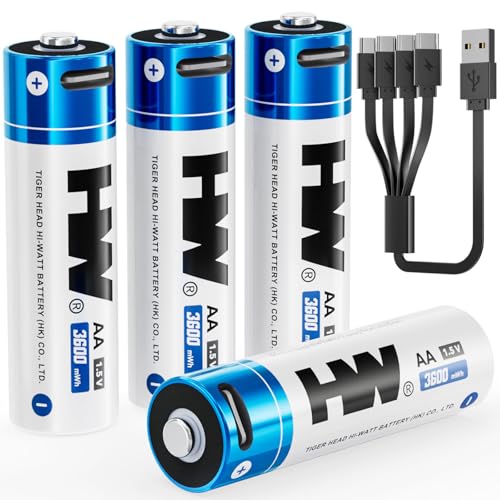 AA batteries HW USB-C rechargeable lithium AA (4-pack) $15.18
 HW USB-C rechargeable lithium AA, a 4-pack for about $15.18, recharges over USB-C without a separate charger, useful for topping off in the field.
Specs and variants Check priceFrequently asked questions
Why do trail camera manuals almost always recommend lithium?
Lithium AA batteries hold their voltage and capacity far more consistently in the cold and under the heavy, repeated drain of night infrared flash, video recording and cellular transmission. Manufacturers recommend them because a weak alkaline set is the single most common cause of a camera going quiet or missing photos in the field.
Can I mix lithium and alkaline batteries in the same camera?
No, mixing battery chemistries in the same device is not recommended by any manufacturer and can cause uneven drain or, in rare cases, damage. Always use a full matching set of the same battery type and, ideally, the same age and brand.
Do rechargeable NiMH batteries save money long term?
Yes, on pure cost per use, since a NiMH set can be recharged hundreds of times instead of thrown away. The tradeoff is lower voltage that some cameras misread as low battery, plus the cost and hassle of a charger, so it works best for a camera confirmed to handle NiMH correctly.
How cold does it have to get before alkaline really struggles?
Alkaline batteries start losing meaningful capacity as temperatures drop toward and below freezing, and the effect gets worse the colder it gets. A camera running through a genuine winter, especially one still transmitting cellular photos, is the clearest case for switching to lithium.
Does battery type affect trigger speed or photo quality?
Not directly, but a weakening alkaline set can cause a camera to slow down, misfire, or stop working correctly as voltage drops, which can look like a trigger speed or image quality problem when it is really a power problem. Fresh lithium batteries remove that variable.
Researched from published specifications, brand plan lists and verified owner reviews; we do not claim hands-on testing. General information, not professional, legal or security advice. Trail camera rules differ by state: some restrict transmitting cameras during hunting seasons or on public land, so check your state wildlife agency. Recording and audio laws vary; only record where you have the right to.