The best trail cameras and setups for the longest battery life

Moultrie Edge Solar
$79.99 listed price, changes oftenPicks by experience level
Beginner
 WOSPORTS 4K No-Glow Trail Camera$39.99
The WOSPORTS 4K No-Glow Trail Camera (about $40) has no cellular radio, the single biggest drain on any trail camera's battery, so a set of lithium AAs lasts noticeably longer in it than in an equivalent cellular camera. It's the simplest way to maximize runtime per battery change if you don't need remote alerts.
Check priceIntermediate
 GardePro X50S Solar Cellular$99.99
The GardePro X50S Solar Cellular (about $100) keeps its internal battery topped off with a built-in solar panel, so you get cellular alerts without swapping batteries nearly as often as a battery-only cellular camera would need.
Check priceExpert
 SPYPOINT Flex-S Dark Solar$389.99
The SPYPOINT Flex-S Dark Solar (about $390) combines an oversized integrated solar panel and battery bank specifically built for months of unattended runtime on a cellular camera. Buy it for a remote site you can't easily revisit. Skip it if you check your cameras every week or two anyway; lithium AAs in a standard camera will last long enough between visits for a fraction of the price.
Check priceWhat actually drains a trail camera's battery?
Night infrared triggers and video recording use far more power than a daytime still photo, so a camera set to record 10-second video clips at night will burn through batteries much faster than one set to single daytime photos. On cellular cameras, sending each photo or clip over the network is the single biggest additional drain, on top of the trigger and flash itself. That's why a non-cellular camera in the same body style will almost always outlast an equivalent cellular one on the same set of batteries.
Lithium AA vs alkaline vs rechargeable, what actually lasts longest?
A standard AA alkaline battery holds about 2,500 mAh at room temperature but loses much of that capacity in freezing weather, which is exactly when trail cameras often run longest between checks. Lithium AA batteries, like the Energizer Ultimate Lithium AA, hold over 3,000 mAh and keep working down to about -40F, typically lasting two to three times longer than alkaline in the same camera through a cold season. NiMH rechargeables run at 1.2V instead of 1.5V, and some cameras misread that lower voltage as a low-battery signal even when there's plenty of charge left, so check your camera's compatibility before relying on rechargeables.
What's the simplest setup for the longest battery life per change?
Pair a non-cellular camera, which has no network radio to drain, with lithium AA batteries. The WOSPORTS 4K No-Glow Trail Camera or GardePro E5S on a set of Energizer Ultimate Lithium AA batteries will typically run longer between changes than any cellular camera on the same battery count, simply because there's no cellular transmission eating into that runtime.
What's the best setup for a camera you rarely visit?
Solar changes the equation entirely: instead of stretching one battery charge as long as possible, a solar panel keeps recharging the battery as long as there's usable daylight. The Moultrie Edge Solar and GardePro X50S Solar Cellular are budget-friendly built-in solar options; the SPYPOINT Flex-S Dark Solar goes further with a larger integrated panel and battery bank built for months of unattended cellular use.
| Setup | Approx. cost | Best for |
|---|---|---|
| Standard camera + lithium AA | about $40-$60 camera, about $12-$41 batteries | Longest life per battery change, no cellular |
| Built-in solar cellular camera | about $80-$100 | Cellular alerts without frequent battery swaps |
| Premium integrated solar + battery bank | about $390 | Months unattended on a remote site |
| Camera + external 12V solar pack | camera price plus about $48-$127 | Adding solar runtime to a camera without built-in solar |
Do external 12V battery packs actually help?
Yes, for compatible cameras. An external pack like the Stealth Cam 12V external battery or the solar-charged Stealth Cam Sol-Pak connects to a camera's external power port and supplies far more capacity than internal AAs alone, which is useful for cellular cameras that would otherwise chew through batteries quickly. Confirm your camera has a compatible external power port before buying one.
How we chose these battery-life picks
Battery capacity figures and cold-weather performance come from each battery's published specs and general lithium-versus-alkaline behavior that's well documented across manufacturers; camera specs come from each listing plus patterns in verified owner reviews. We have not run our own runtime tests on any of these products.
Buying tips for maximizing battery life
- Switch to lithium AAs before cold weather hits; the difference in cold-weather runtime versus alkaline is large.
- Set fewer, shorter night video clips instead of long ones if battery life matters more than footage length.
- Use the battery life calculator to estimate runtime for your specific camera settings before committing to a battery type.
- On a cellular camera, a solar panel is usually a better upgrade for runtime than any battery chemistry alone.
More picks worth a look
Listed prices change often; the button shows the current price.
 AA batteries Energizer Ultimate Lithium AA (24-pack) $41.08
 Energizer Ultimate Lithium AA, 24-pack (about $41) is the reference battery for cold-weather runtime, rated to work down to about -40F and holding far more capacity than alkaline in freezing conditions.
Specs and variants Check price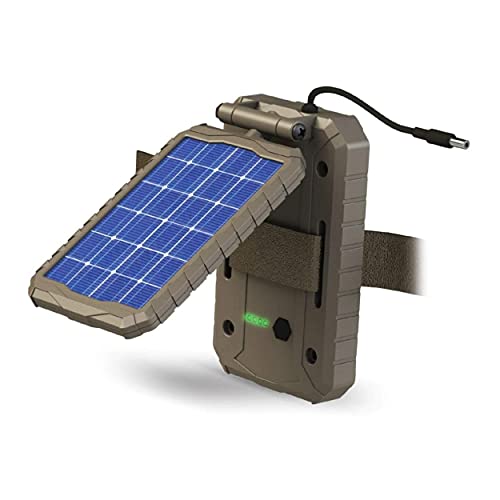 Battery pack Stealth Cam Sol-Pak 12V solar battery pack $48.00
 The Stealth Cam Sol-Pak 12V solar battery pack (about $48) is an external solar-charged 12V pack that can run a compatible camera far longer than internal AAs alone.
Specs and variants Check price Solar panel Moultrie Solar Power Pack Gen 2 (3.4W) $75.00
 The Moultrie Solar Power Pack Gen 2 (about $75) adds solar charging to a Moultrie Edge camera that didn't ship with a panel.
Specs and variants Check price Solar panel SPYPOINT SPLB-22 solar panel with battery $127.00
 The SPYPOINT SPLB-22 solar panel with battery (about $127) is a larger add-on panel and battery for SPYPOINT cameras that need more runtime than the standard internal battery gives.
Specs and variants Check priceFrequently asked questions
How long do trail camera batteries actually last?
It depends heavily on settings and camera type. A non-cellular camera on lithium AAs set to daytime still photos can run for several months; the same camera set to frequent night video, or any cellular camera sending photos over a network, will drain far faster, sometimes down to just weeks. Use a battery life calculator with your specific settings for a realistic estimate.
Do lithium batteries really last longer than alkaline in a trail camera?
Yes, especially in cold weather. Lithium AA batteries hold more capacity than alkaline to start with and keep working reliably down to about -40F, while alkaline batteries lose much of their charge as temperatures drop. In a trail camera running through a cold season, lithium typically lasts two to three times longer than alkaline.
Does a solar panel eliminate the need for batteries?
No. A solar panel recharges the camera's battery, it doesn't replace the battery itself. You still need a working battery installed; the panel just means it needs recharging or replacing far less often, and mainly during months with enough usable daylight.
Are rechargeable NiMH batteries a bad choice for trail cameras?
Not necessarily, but check compatibility first. NiMH batteries run at 1.2V instead of a standard 1.5V, and some trail cameras misread that lower voltage as a low-battery warning even when there's plenty of charge left. If your camera handles NiMH well, rechargeables can save money over time; if it doesn't, you'll get inconsistent readings and shorter apparent runtime.
What drains a cellular trail camera's battery fastest?
Sending photos and video over the cellular network is the single biggest drain, on top of the trigger and infrared flash that every trail camera uses. Night video clips add further drain beyond daytime stills. A non-cellular camera with the same settings will almost always last longer on the same batteries, simply because it skips the transmission step entirely.
Researched from published specifications, brand plan lists and verified owner reviews; we do not claim hands-on testing. General information, not professional, legal or security advice. Trail camera rules differ by state: some restrict transmitting cameras during hunting seasons or on public land, so check your state wildlife agency. Recording and audio laws vary; only record where you have the right to.