How many trail cameras do I need?
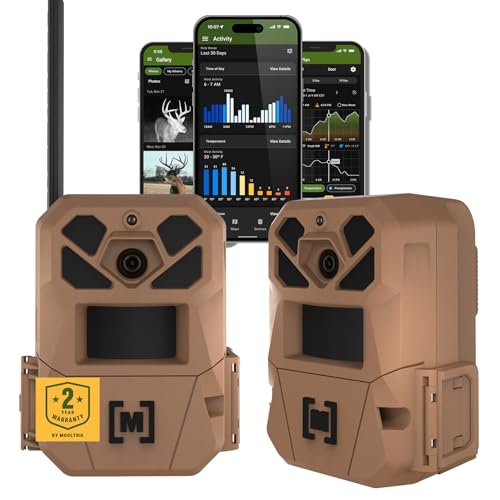
Moultrie Edge 3 (2-pack)
$99.00 listed price, changes oftenMost scouts run one camera per 30 to 50 acres, concentrated where travel routes pinch.
Place cameras where travel pinches (creek crossings, field corners, gates), not on a grid.
Gear for this result
Matched to what this calculator decides. Listed prices change often.


 SD-card trail camera WOSPORTS Mini Trail Camera (2-pack) $59.99 for 2 cameras Specs and variants Check price
 How many trail cameras do I need per acre?
For general scouting, most hunters run about one camera per 30 to 50 acres (the calculator uses 40), placed where movement concentrates rather than on a grid. For a deer population survey the long-standing camera-survey method uses about one camera site per 100 acres. For a small tract where you are after one animal, one per 10 to 20 acres is reasonable. For security the count follows entry points, not acreage: every gate, driveway and building approach gets its own camera.
Where should the cameras go?
Spend cameras where travel pinches: creek crossings, field corners, gaps in fences, saddles between ridges, the edges of food plots and water. One camera on each food plot usually beats two in the timber. On multi-camera setups, the 2-packs are the cheapest way in: the Moultrie Edge 3 2-pack and the SPYPOINT Flex-M Twin both cost well under $50 a camera at listed prices.
| Property | Scouting (1 per 40 ac) | Survey (1 per 100 ac) |
|---|---|---|
| 40 acres | 1 | 1 |
| 80 acres | 2 | 1 |
| 160 acres | 4 | 2 |
| 320 acres | 8 | 4 |
Cellular or SD card for several cameras?
A network of cellular cameras multiplies the plan cost, so the plan structure matters: Tactacam discounts extra cameras, Stealth Cam gets cheaper per camera as you add them, and SPYPOINT's free tier covers quiet spots. Mixing works well: cellular on the one or two spots you need to see now, SD-card cameras like the GardePro E5S 2-pack everywhere else.
Worked tables by property size: 5, 10, 20, 40, 60, 80, 100, 160, 200, 320 and 640 acres.
Frequently asked questions
How many trail cameras should I put on 100 acres?
Two to three for general scouting at one camera per 40 acres, placed on pinch points and food plots, or one for a population survey at the one per 100 acres convention. Add one per food plot. A single well-placed camera on the best crossing often tells you more than three cameras spread evenly.
Is it better to have more cheap cameras or fewer good ones?
For SD-card scouting, more cheap cameras usually win, because coverage matters more than image quality. For cellular cameras the plan cost dominates, so fewer, better-placed cameras on the best signal usually win. For security, trigger speed and no-glow flash matter more than count.
How far apart should trail cameras be?
There is no fixed spacing. Cameras belong where animals or people must pass, so two cameras 100 yards apart on two different crossings can both be right. Avoid putting two cameras on the same trail unless you want direction of travel.
Researched from published specifications, brand plan lists and verified owner reviews; we do not claim hands-on testing. General information, not professional, legal or security advice. Trail camera rules differ by state: some restrict transmitting cameras during hunting seasons or on public land, so check your state wildlife agency. Recording and audio laws vary; only record where you have the right to.