The best Wi-Fi trail cameras

GardePro E6 2.0 Pro WiFi
$79.99 listed price, changes oftenPicks by experience level
Beginner
 GardePro E6 WiFi$44.99
The GardePro E6 WiFi (about $45) has a no-glow flash and a 45 ft Wi-Fi range, enough to check photos from your porch or a nearby vehicle. It's a good, cheap first Wi-Fi camera for a backyard or garden where you don't need a long connection range.
Check priceIntermediate
 GardePro E6+ WiFi$62.99
The GardePro E6+ WiFi (about $63) extends the range to 75 ft and adds live view on top of the no-glow flash, useful once your camera sits a bit farther from where you'll stand to check it.
Check priceExpert
GardePro E6 2.0 Pro WiFi$79.99The GardePro E6 2.0 Pro WiFi (about $80) has the longest range in this lineup at 165 ft, plus 4K video and no-glow infrared. It's the pick if you want to check photos from well away from the camera itself. Skip it if you're checking the camera up close every time anyway; the base E6 WiFi does that job for almost half the price.
Check priceWhat does "Wi-Fi trail camera" actually mean?
A Wi-Fi trail camera broadcasts its own short-range wireless signal directly to your phone's app, so you can pull photos without opening the camera or pulling the SD card. That's a direct camera-to-phone connection, not a connection to your home internet or router: it only works when your phone is within the camera's Wi-Fi range, typically 45 to 165 ft depending on the model, not from your house or your phone's cellular data when you're away from the site.
This trips up a lot of first-time buyers, since "Wi-Fi" sounds like it should mean the camera connects to your home network the way a laptop or smart speaker does. It doesn't. The camera creates its own small local hotspot; your phone joins that hotspot when you're close enough, pulls the new photos over it, and then the connection drops again once you walk away. There's no router, no home network, and no internet involved at any point in that exchange.
How is that different from a cellular trail camera?
A cellular camera sends photos over the carrier network to an app anywhere you have signal, including from across the country. A Wi-Fi camera only reaches your phone when you're standing near the camera itself. If you want photos while you're away from the property, you need cellular, not Wi-Fi; see our best cellular trail camera picks for that use case.
Which Wi-Fi camera has the best range?
Range varies a lot by model even within the same brand. The GardePro E6 2.0 Pro WiFi publishes a 165 ft range, more than three times the base GardePro E6 WiFi's 45 ft. The GardePro E6+ WiFi sits in between at 75 ft, and the BoxLegend WiFi Trail Camera claims 85 ft.
| Camera | Price | Wi-Fi range | Video | Glow |
|---|---|---|---|---|
| GardePro E6 WiFi | about $45 | 45 ft | 1080p | No-glow |
| GardePro E6+ WiFi | about $63 | 75 ft | 1080p | No-glow |
| BoxLegend WiFi (64GB card) | about $40 | 85 ft | 4K | Not specified |
| MAXDONE WiFi Bluetooth | about $50 | 65 ft | 4K | Low-glow |
| GardePro E6 2.0 Pro WiFi | about $80 | 165 ft | 4K | No-glow |
When is Wi-Fi not enough, and you need cellular instead?
If the camera sits somewhere you can't walk to easily, a food plot on the back of a large property, a remote gate, a cabin you only visit occasionally, Wi-Fi's range simply won't reach. That's the exact situation cellular cameras like the Moultrie Edge 3 are built for. Wi-Fi is the right choice for a backyard, garden, or any spot you regularly pass by anyway; it's the wrong choice for anything you need to check remotely.
A useful test: if you'd normally drive or walk out to check the camera's SD card every week or two regardless, Wi-Fi saves you the trouble of opening the housing once you're standing there. If instead you're hoping to see photos without making that trip at all, no Wi-Fi camera, no matter how long its published range, will do that job; only a cellular plan reaches your phone from somewhere else entirely.
Do Wi-Fi trail cameras need a subscription?
No. Wi-Fi cameras connect directly to your phone with no carrier network involved, so there's no monthly plan to pay for, unlike cellular cameras. That no-subscription simplicity is one of the biggest reasons to choose Wi-Fi over cellular when range isn't a problem.
How we chose these Wi-Fi trail cameras
Wi-Fi range, trigger speed, and video specs listed here come directly from each product's published Amazon listing, along with patterns in verified owner reviews. We have not tested the actual range of any of these cameras ourselves; treat published range figures as manufacturer claims made under open, unobstructed conditions.
Buying tips for a Wi-Fi camera
- Match the range to how close you're actually willing to walk; a 45 ft range is fine if you check the camera in person anyway.
- Expect real-world range to fall short of the published figure through brush, trees, or terrain.
- If you need to check photos from off the property, buy cellular instead; Wi-Fi cannot do that job.
More picks worth a look
Listed prices change often; the button shows the current price.
 Wi-Fi / Bluetooth trail camera Zonetiger 4K WiFi Trail Camera $49.99
 The Zonetiger 4K WiFi Trail Camera (about $50) has an unusually fast 0.05 second trigger for a Wi-Fi camera at this price.
Specs and variants Check price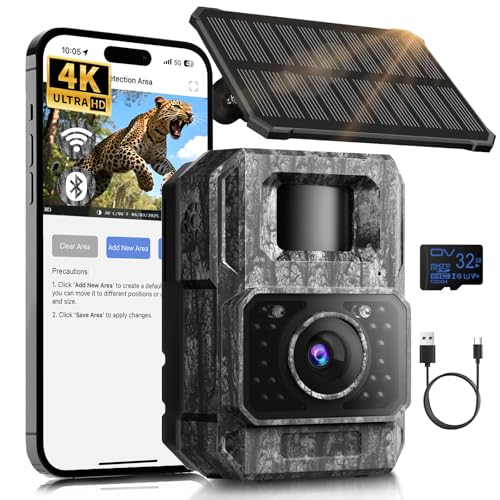 Wi-Fi / Bluetooth trail camera MAXDONE Solar WiFi Trail Camera $56.99
 The MAXDONE Solar WiFi Trail Camera (about $57) adds a built-in solar panel to the Wi-Fi convenience.
Specs and variants Check price Wi-Fi / Bluetooth trail camera MAXDONE WiFi Bluetooth Trail Camera $49.99
 The MAXDONE WiFi Bluetooth Trail Camera (about $50) adds Bluetooth pairing alongside its 65 ft Wi-Fi range.
Specs and variants Check price Wi-Fi / Bluetooth trail camera BoxLegend WiFi Trail Camera with 64GB card $39.99
 The BoxLegend WiFi Trail Camera with 64GB card (about $40) bundles a card in with an 85 ft range.
Specs and variants Check priceFrequently asked questions
Does a Wi-Fi trail camera connect to my home internet?
No. A Wi-Fi trail camera creates its own direct wireless connection to your phone's app; it does not join your home Wi-Fi network or send photos over the internet. You can only pull photos when your phone is within the camera's own Wi-Fi range, typically well under 200 ft.
How far does trail camera Wi-Fi actually reach?
It varies by model, from about 45 ft on entry cameras like the GardePro E6 WiFi up to about 165 ft on the GardePro E6 2.0 Pro WiFi. These are manufacturer-published figures under open conditions; expect shorter real-world range through trees, brush, or buildings.
Is Wi-Fi or cellular better for a food plot camera?
Cellular is almost always the better choice for a food plot or any spot you can't easily walk to. Wi-Fi only reaches your phone within its short range, so you'd have to physically approach the camera to see photos anyway, which defeats the point of a remote check-in.
Do Wi-Fi trail cameras need a monthly subscription?
No. Wi-Fi cameras connect directly to your phone with no carrier network, so there's no data plan or subscription required at any point. That's one of the main advantages over a cellular camera, which always needs a paid or free-tier data plan to send photos remotely.
What's the range difference between GardePro's E6 Wi-Fi models?
The base GardePro E6 WiFi publishes a 45 ft range, the GardePro E6+ WiFi extends that to 75 ft, and the GardePro E6 2.0 Pro WiFi claims 165 ft, more than triple the base model. Range generally scales with price across this lineup, along with video resolution and night vision type.
Is a Wi-Fi trail camera a good fit for a backyard or garden?
Yes, this is exactly the use case Wi-Fi trail cameras suit best. You're already close to the house, so pulling photos over a 45 to 165 ft direct connection is convenient, and you avoid paying for a cellular data plan you don't need. Save cellular for spots you can't walk to regularly, like a food plot or a remote gate.
Researched from published specifications, brand plan lists and verified owner reviews; we do not claim hands-on testing. General information, not professional, legal or security advice. Trail camera rules differ by state: some restrict transmitting cameras during hunting seasons or on public land, so check your state wildlife agency. Recording and audio laws vary; only record where you have the right to.